Showing posts sorted by relevance for query "Peter Cooper". Sort by date Show all posts

July 6, 2017

A crash course in macro accounting

Comment on Peter Cooper on ‘Fiscal Policy, Sectoral Balances, and Financial Sustainability’

Blog-Reference and Blog-Reference

You say: “PRIVATE Balance + GOVT Balance + FOREIGN Balance = 0” and “This is an accounting identity, which means it always holds true.

This is NOT the case because you messed up the elementary mathematics of accounting. #1 To see this, one has to go back to the MOST ELEMENTARY economic configuration, that is, the pure production-consumption economy, which consists of the household sector and the business sector. #2

In this elementary economy, three configurations are logically possible: (i) consumption expenditures are equal to wage income Ec=Yw, (ii) Ec is less than Yw, (iii) Ec is greater than Yw.

In case (i), the monetary saving of the household sector Sm≡Yw−Ec is zero, and the monetary profit of the business sector Qm≡Ec−Yw, too, is zero.
In case (ii), monetary saving Sm is positive, and the business sector makes a loss, i.e., Qm is negative.
In case (iii), monetary saving Sm is negative, i.e., the household sector dissaves, and the business sector makes a profit, i.e., Qm is positive.

It always holds Qm≡−Sm, in other words, at the heart of national income accounting is an identity — the business sector’s deficit (surplus) equals the household sector’s surplus (deficit). Put bluntly, loss is the counterpart of saving, and profit is the counterpart of dissaving. This is the most elementary form of the macroeconomic Profit Law.

The balances of the business sector, the household sector, the government sector, and the rest of the world are interrelated as follows: Qm≡−Sm+I+Yd+(G−T)+(X−M), and THIS is the correct accounting identity for an open economy (X−M) with a government sector (G−T) and with the business investment I and distributed profit Yd.

Your accounting blunder consists of lumping together the business sector and the household sector. This makes the crucial relation between profit, distributed profit, saving, and investment invisible #3, which amounts to an intended/unintended destruction of valuable information, which in turn is contrary to the very purpose of accounting.

Egmont Kakarot-Handtke


#1 The Common Error of Common Sense: An Essential Rectification of the Accounting Approach
#2 (A0) The objectively given and most elementary configuration of the economy consists of the household and the business sector, which in turn consists initially of one giant fully integrated firm. (A1) Yw=WL wage income Yw is equal to wage rate W times working hours. L, (A2) O=RL output O is equal to productivity R times working hours L, (A3) Ec=PX consumption expenditure Ec is equal to price P times quantity bought/sold X. For a start, it holds X=O. Note that ALL variables are measurable. Ec and Yw appear in National Accounting.
#3 How Keynes got macro wrong and Allais got it right

Related 'Rectification of MMT macro accounting' and 'Down with idiocy!' and 'Is Nick Rowe stupid or corrupt or both?' and 'A tale of three accountants'. For  details of the big picture, see cross-references Accounting

***
REPLY to jrbarch on Jul 7

You say: “Therefore it makes perfect sense to sum businesses and households as the ‘private sector’ who hold these tax credits.”

It makes a real difference whether what you call tax credits are held by the households or by the firms. By lumping both together in what Peter Cooper calls the "private sector" this difference is made invisible. #1

If this is done unintentionally, it is sheer scientific incompetence; if this is done intentionally, it is what people call cooking the books. If one is not committed to science, though, it is merely brain-dead blather.

#1 For the political implications, see Austerity and the idiocy of political economists.

***
REPLY to jrbarch on Jul 8

Peter Cooper argues: “For the economy to grow in a financially sustainable way, the private sector should normally be allowed to maintain a financial surplus (spending less than its income). For many countries (the majority with current account deficits), this means government needs to spend more than it taxes under normal circumstances.”

Because ‘spending less than income’ is the definition of saving, the condensed form of the argument reads: because the households should be allowed to save, the government must dissave, because from accounting follows with mathematical certainty that for any surplus there must be a deficit of equal magnitude somewhere else in the economy.

The problem with this argument is that economists in general and Peter Cooper, in particular, do not understand the elementary mathematics of accounting.

The balances of the business sector, the household sector, the government sector, and the rest of the world are interrelated as follows: Qm≡−Sm+I+Yd+(G−T)+(X−M). This boils down to Qm=−Sm+(G−T) for I, Yd, X, M = 0.

So, there are two limiting cases: (i) If the household sector’s saving Sm goes up and the government’s deficit (G−T) goes up by the same amount, the profit of the business sector Qm remains unchanged. (ii) If the household sector’s saving Sm remains unchanged and the government’s deficit (G−T) goes up, the profit of the business sector Qm goes up by the same amount. It holds that Public Deficit = Private Profit.

So, the counterpart of an increased public deficit is either increased saving of the households or increased profits of the firms, or some combination of the two. Therefore, to say that the counterpart of an increased public deficit is an increased surplus of the “private sector” obscures important real-world differences.

Worse. In the past decades, US households increased their debt; that is, they were dissaving. So, BOTH private and public households ran deficits. From the formula above follows that this boosts profit Qm TWICE. And this is exactly what has been observed and criticized as a catastrophic deterioration of the income distribution.

So, by arguing for government deficits because the “private sector should normally be allowed to maintain a financial surplus,” Peter Cooper is de facto arguing for profit increases of the business sector. #1 He obscures this fact by lumping together the business sector and the household sector into the “private sector”. #2


#1 See also Keynesianism as ultimate profit machine.

***
REPLY to jrbarch on Jul 9

You say: “So, to me, you are all on the same page, but with different concepts.” You are simply ill-informed. The formal foundations of MMT are logically defective, and because of this, MMT policy guidance has NO sound scientific foundations. For more details, see these comments
***
REPLY to jrbarch on Jul 10

You say: “you have asked me to move logically from the sectoral balances framework to your own, but I can see no reason to do so?”

There is obviously a gross misunderstanding on your side.

The purpose of my post is to inform Peter Cooper that the accounting identity he starts with is defective and that, as a consequence, the rest of his intro is garbage.

The purpose of my post is NOT to educate jrbarch. And if you “can see no reason” to think logically, then simply do not. There is NO need to tell me.

Peter Cooper’s accounting identity is mathematically false. Whether you understand this or not is a matter of indifference.

***

Graphic AXEC143d

September 27, 2017

The profit effect of a Job Guarantee

Comment on Peter Cooper on ‘The Income-Expenditure Model with a Job Guarantee’

Blog-Reference

Peter Cooper analyses the effect of a Job Guarantee by applying the familiar Keynesian formalism. This formalism is false because it lacks the pivotal variable macroeconomic profit. Keynesian macro models are since 80+ years only good for the wastebasket.

Economics has to be reconstructed from scratch. As the new analytical starting point, the elementary production-consumption economy is defined with this set of macro axioms: (A0) The objectively given and most elementary configuration of the economy consists of the household and the business sector which in turn consists initially of one giant fully integrated firm. (A1) Yw=WL wage income Yw is equal to wage rate W times working hours. L, (A2) O=RL output O is equal to productivity R times working hours L, (A3) C=PX consumption expenditure C is equal to price P times quantity bought/sold X.

Under the conditions of market-clearing X=O and budget-balancing C=Yw the price is given by P=W/R, i.e., the market-clearing price is equal to unit wage costs. This is the most elementary form of the macroeconomic Law of Supply and Demand. For the graphical representation, see Figure 1. #1

Monetary profit for the economy as a whole is defined as Qm≡C−Yw, and monetary saving as Sm≡Yw−C. It always holds Qm≡−Sm, in other words, the business sector’s surplus = profit (deficit = loss) equals the household sector’s deficit = dissaving (surplus = saving). This is the most elementary form of the macroeconomic Profit Law. Under the condition of budget-balancing total monetary profit is zero.

With this, the point to start with is clearly defined. Now it is assumed for simplicity that the business sector reduces initial employment L by half and that the government immediately absorbs the unemployment such that total employment remains unchanged, i.e. Lb+Lg=L=full employment. The wage rate W remains unchanged, and therefore, total wage income Yw remains unchanged. Under the condition of budget-balancing C=Yw consumption expenditures, too, remain unchanged.

Because labor input in the business sector is reduced from L to Lb=½L the initial output is reduced from O to Ob=½O. On the other hand, the output of the public good increases from zero to Og=RgLg. This output is made available to the public for free by the government sector.

The wage bill of the business sector is reduced by half, i.e., Ywb=WLb with Lb=½ L. The other half of the wage bill is paid by the government sector, i.e., Ywg=WLg with Lg=½L. The government pays the wage bill Ywg with money created by the central bank.

Consumption expenditures C remain constant, but the business sector’s output is halved. By consequence, the market-clearing price rises from P0 to P1. As a result, the profit of the business sector rises from Qm0=C−WL=0 to Qm1=C−WLb=C−W½L.

Ultimately, the budget deficit of the government sector, i.e., Ywg, ends up as profit in the cash box of the business sector, i.e., Qm1=Ywg. It holds Public Deficit = Private Profit. This configuration can continue for an indefinite time with public debt vis-à-vis the central bank rising continuously, and with the business sector’s pile of cash rising continuously.

What is rather strange is that the word profit does not appear once in Peter Cooper’s analysis of the Job Guarantee program, which is in effect a Profit Guarantee program. #2

Egmont Kakarot-Handtke

#1 Graphic AXEC31 Elementary production-consumption economy
#2 For the full-spectrum refutation of MMT, see cross-references

***
REPLY to Six, Tom Hickey on Sep 27

You obviously have not noticed that the issue is MMT profit theory and NOT MMT employment theory.

MMT employment theory has already been refuted elsewhere, see ‘Macrofounded labor market theory

***
REPLY to Six, Matt Franko on Sep 27

In your utter confusion, you obviously have not noticed that the issue is MMT profit theory and NOT distributed and retained profit.

These issues have already been dealt with elsewhere, see Essentials of Constructive Heterodoxy: Profit, Sec. 7

Because MMT got profit theory wrong, it also got profit distribution wrong, nay, it got the whole analytical superstructure wrong. This brings us back to Peter Cooper’s provably false MMT income-expenditure model, which neither mentions profit, nor distributed profit, nor retained profit.

In sum: (i) the formal foundations of MMT are inconsistent,* (ii) MMT is a wholesale analytical failure, (iii) MMTers are incompetent scientists, (iv) MMT policy is a Profit Guarantee program for the one-percenters, (vi) the claim that MMTers support the cause of the ninety-nine percenters is either self-delusion or political fraud.

* For the axiomatically correct formal framework, see Graphic AXEC112c Elementary production-consumption economy incl. distributed profit and money.


***
REPLY to Matt Franko on Sep 27

You say: “… all MMT is doing is relying on the well-established accounting methodology in National Income Accounting ...”

That is very bad because National Accounting is methodologically flawed and if MMTers were only a little above Trump University level they would have realized the blunder.#1

In addition, it is NOT true because profit appears in National Accounting but NOT in the MMT balances equations.#2

The fact is that economists in general and MMTers, in particular, are too stupid for the elementary mathematics of accounting.


***
REPLY to Six, Matt Franko on Sep 28

Let us agree on the essential points:
(i) A Job Guarantee program combined with deficit spending increases the business sector’s overall monetary profit by the exact amount of the deficit,
(ii) Peter Cooper’s income-expenditure model does not capture this effect,
(iii) all models that do not explicitly contain macroeconomic profit are scientifically worthless,
(iv) the MMT policy agenda has no sound scientific foundation,
(v) MMTers have to be expelled from the sciences.

December 17, 2017

Demand-led and wage-led growth

Comment on Peter Cooper on ‘A Notion of Demand-Led Growth’

Blog-Reference

Peter Cooper argues within the Keynesian framework: “The Keynesian or Kaleckian view is that normally the economy is operating inside the ultimate supply limit to a degree that is determined by demand. The economy is therefore regarded as demand constrained under normal circumstances.”

Peter Cooper has not realized that Keynesian and Kaleckian macro is already dead for 80+ years.

Keynes defined the formal foundations of the General Theory as follows: “Income = value of output = consumption + investment. Saving = income − consumption. Therefore saving = investment.” (p. 63) This elementary two-liner is conceptually and logically defective because Keynes never came to grips with profit. (Tómasson et al.) Kalecki’s profit theory is not any better. #1 Because neither pro- nor anti-Keynesians realized the lethal methodological blunder, After-Keynesian employment theory is false until this very day. #2

To cut the meticulous formal derivation short, an elementary version of the axiomatically correct systemic Employment Law is shown on Graphic AXEC62:


From this equation follows
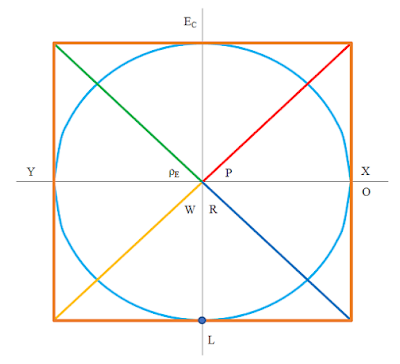
(i) An increase in the expenditure ratio ρE leads to higher employment L (the Greek letter ρ stands for ratio). An expenditure ratio ρE>1 indicates credit expansion, a ratio ρE<1 indicates credit contraction of the household sector.
(ii) Increasing investment expenditures I exert a positive influence on employment; a slowdown in growth does the opposite.
(iii) An increase in the factor cost ratio ρF≡W/PR leads to higher employment.

The complete Employment Law is a bit longer and contains, in addition, profit distribution, public deficit spending, and import/export. The Employment Law is composed of measurable real and nominal variables and is therefore testable.

Items (i) and (ii) are familiar since Keynes. But Keynesian macro is incomplete. The correct employment multiplier is composed of the expenditure ratio and the factor cost ratio. The ratio ρF, as defined in (iii), embodies the price mechanism. It works such that overall employment INCREASES if the average wage rate W INCREASES relative to the average price P and productivity R.

So, there are two policy levers, and what has to be done is to combine demand-led and wage-led expansion in order to get out of unemployment. The post-Keynesian preoccupation with demand is ultimately ineffective because each increase in the expenditure ratio can be counteracted by a decrease in the factor cost ratio. Therefore, economic policy must control both ratios.

The bottom line is that Peter Cooper’s post is a senseless repetition of arguments that were already false 80+ years ago. #3

Egmont Kakarot-Handtke


#1 What is Wrong with Heterodox Economics? Kalecki’s Profit Theory as an Example
#2 Keynes’ Employment Function and the Gratuitous Phillips Curve Disaster
#3 For details of the big picture, see cross-references Employment

Related 'Robots, exploitation, and the reproducible economy' and 'Settling the Phillips Curve for good' and 'Full employment through the price mechanism' and 'NAIRU, wage-led growth, and Samuelson's Dyscalculia'.

May 15, 2019

MMT, money, value, and transcendental Capitalism

Comment on Peter Cooper on ‘Currency Acceptance, Currency Value, and Transcending Capitalism’

Blog-Reference and Blog-Reference

Peter Cooper argues: “A currency’s role as public utility hinges on currency acceptance. A currency expresses (marxist) value in the sphere of commodity production so long as it represents an amount of socially necessary abstract labor. If so, it is relevant to distinguish two questions: (i) what drives acceptance of the currency? and (ii) what determines the value of the currency?”

Peter Cooper answers the question of acceptance: “Government has the authority to impose taxes (and other obligations) on members of the community and specify what will be accepted in payment. In principle, this authority is bestowed upon government by the community and, ideally, will be exercised in a democratically accountable way.”

This is not correct. Imagine an elementary production-consumption economy consisting of the household sector and the business sector. #1, #2, #3 The business sector pays the wage income Yw with its own IOUs, and the households, in turn, fully spend the IOUs for buying the consumption good output from the business sector, i.e., C=Yw. The workers will accept the business sector’s IOU’s as payment if they can be reasonably sure that the creation/destruction of IOUs is fraud-safe. This can best be achieved if the business sector’s IOUs are replaced by the central bank’s generalized IOUs, i.e., by fiat money. The acceptance of fiat money does NOT depend on the taxing power of the state but on institutional safeguards.

Peter Cooper answers the question of value: “In Marx’s theory, ‘value’ (defined as socially necessary labor time) governs commodity production and exchange.”

This is not correct because Marx’s Theory of Value is provably false. Marx got profit, exploitation, and classes wrong.#4 To this day, Marx and Marxians lack the concept of cross-over exploitation. #5

From the true macrofoundations follows the macroeconomic Law of Supply and Demand as shown here. #6 It says:


(i) An increase in the expenditure ratio ρE≡C/Yw leads to a higher market-clearing price (the Greek letter ρ stands for ratio). An expenditure ratio ρE greater than 1 indicates deficit-spending/dissaving/credit-expansion, a ratio ρE less than 1 indicates saving/credit-contraction.

(ii) An expenditure ratio greater than 1 makes that macroeconomic profit, i.e., Q≡C−Yw or Q≡(ρE−1)Yw, greater than zero.

(iii) Deficit spending, i.e., the move from ρE=1 to ρE greater than 1, causes a one-off price hike but NOT inflation.

From the macroeconomic Law of Supply and Demand follows the purchasing power of the wage, a.k.a. the Value of Money, as W/P=R in the elementary case of budget balancing, i.e., of C=Yw or ρE=1. In other words, the Labour Theory of Value is false since the founding fathers. Value does NOT depend on socially necessary labor time.#7 The Value of Money depends on productivity R.

When the government sector is added, the macroeconomic Profit Law reads Q≡(G−T)+(I−S) or Public Deficit (G−T) = Private Profit Q if I and S are taken out of the picture for a moment.

So, profit in transcendental Capitalism does NOT depend on the exploitation of the workers but on the deficit spending of the government sector and the household sector. Roughly speaking, transcendental Capitalism is state-sponsored.#8 The accumulated sponsoring is measured by the public debt, which currently stands at $22 trillion. The so-called free-market economy has already, for a long time, been on full life-support of the State.#9

Egmont Kakarot-Handtke


#1 This is the true core of macroeconomic premises: (A0) The objectively given and most elementary systemic configuration of the economy consists of the household and the business sector, which in turn consists initially of one giant fully integrated firm. (A1) Yw=WL wage income Yw is equal to wage rate W times working hours. L, (A2) O=RL output O is equal to productivity R times working hours L, (A3) C=PX consumption expenditure C is equal to price P times quantity bought/sold X.
For a start X=O, i.e., market-clearing holds. The ratio ρE≡C/Yw is called the expenditure ratio; ρE=1 indicates budget balancing of the household sector.
#2 True macrofoundations: the reset of economics
#3 MMT is dead
#4 The thing with profit and exploitation
#5 Capitalism, poverty, exploitation, and cross-over exploitation
#6 Graphic AXEC101 Law of Supply and Demand, elementary production-consumption economy
#7 Economics ― nothing but claptrap, twaddle, drivel, slip-slop, wish-wash, waffle, and proto-scientific garbage
#8 No future for Socialism and Capitalism
#9 Keynes, Lerner, MMT, Trump, Biden, and exploding profit

Related 'The objective value of money'. and 'MMT: fundamentally false' and 'Warren Mosler: scientific dilettante and political fraudster' and 'MMT: The fusion of Wall Street and Academia' and 'Rethinking the Profit Law' and 'Basics of Value Theory' and 'Mathematical Proof of the Breakdown of Capitalism'.

September 2, 2017

MMT: NO sound scientific foundations

Comment on Peter Cooper on ‘Short & Simple 19 ― Sectoral Balances in a Closed, Demand-Determined Economy’

Blog-Reference and Blog-Reference

In economics, it is important to separate politics and science. While anybody can make a plausible and populist economic policy proposal, an economist can NOT. What the economist says must be backed up by the true theory. The economist who lacks the true theory is at one level with the cranks that populate the political arena.

“A sure sign of a crisis is the prevalence of cranks. It is characteristic of a crisis in theory that cranks get a hearing from the public, which orthodoxy is failing to satisfy. In the thirties, we had Major Douglas, and social credit — it can all be done with a fountain pen — and Warren and Pearson, who convinced President Roosevelt that raising the dollar price of gold would raise the price of everything else and bring the slump to an end. The cranks are to be preferred to the orthodox because they see that there is a problem. Nowadays, we have plenty of cranks taking up the problems that the economists overlook.” (Robinson)

Not much has changed since Joan Robinson. The only difference between the ordinary crank and the economist is that the latter has a diploma.

The policy MMT stands for is backed in the main by Keynesian macroeconomics. The thing about Keynesianism is that it is scientifically worthless since the General Theory, that is, provably false, that is, materially and formally inconsistent. The thing about MMTers is that they are mindlessly repeating Keynes’s awkward blunders.

Peter Cooper combines key Keynesian macro identities with particular behavioral assumptions to provide a theory of income determination. The behavioral equations add causation to the model. The starting point is given with the macro identity S+T=G+I.

When the government sector is taken out for a moment, i.e., G, T = 0, then the equation reduces to the formal core of the General Theory, i.e., to I=S. To recall: “Income = value of output = consumption + investment. Saving = income − consumption. Therefore saving = investment.” (p. 63) #1

All I=S/IS-LM models are false because Keynes’ premise “Income = value of output” is false. #2 Scientists know since Aristotle that if the premises are false, the whole theoretical superstructure falls apart. Because only “When the premises are certain, true, and primary, and the conclusion formally follows from them, this is demonstration, and produces scientific knowledge of a thing.”

Because Peter Cooper starts from a false premise, i.e., the macro identity S+T=G+I, there is no use at all to add causal equations and then to derive economic policy conclusions. The only sensible thing to do is to throw this rubbish without further ado into the wastebasket.

The proof has been given that Qm≡−Sm in the elementary production-consumption economy and Qm≡I−Sm in the investment economy. In plain text, the proof says that saving and investment are NEVER equal. #3 So, Keynesianism and, by implication, MMT are refuted on all counts. #4

Note that not only is Peter Cooper’s model refuted, but ALL models that contain I=S go back to Wicksell and even further. #5

Egmont Kakarot-Handtke


#1 Keynesians ― terminally stupid or worse?
#2 How Keynes got macro wrong and Allais got it right
#3 For more details, see cross-references MMT
#4 Mr. Keynes, Prof. Krugman, IS-LM, and the End of Economics as We Know It
#5 Going beyond Wicksell, Keynes, and MMT

Related 'Rectification of MMT macro accounting'.

***

Graphic AXEC157 Employment multiplier for the elementary investment economy

August 12, 2017

MMT and the magical profit disappearance

Comment on Peter Cooper on ‘Short & Simple 15 – The Sectoral Balances Identity’

Blog-Reference

Peter Cooper summarizes: “This is the sectoral balances identity. In words: Domestic Private Balance + Government Balance + Foreign Balance = 0. The balances of the three sectors cancel each other out. … The result can be aggregated a bit more by combining the domestic-private and foreign sectors into the Non-Government Sector. The identity then becomes Non-Government Balance + Government Balance = 0. … If the non-government manages to maintain a financial surplus, then by definition the government will be running a deficit. In doing so, non-government will accumulate net financial assets over the period and increase its stock of net financial wealth.”

Let us put the accounting right.#1, #2. At first, we have only the business and the household sector. The two sectoral balances are given as follows:

Qm≡C−Yw   profit Qm is the household sector’s spending C minus wages Yw,
Sm≡Yw−C   saving Sm is wage income Yw minus consumption expenditures C,
-------------
Qm≡−Sm.

The business sector’s monetary profit Qm is equal to the household sector’s dissaving. This is the most elementary form of the macroeconomic Profit Law.

Now, the government sector GS has been added. The three sectoral balances are given as follows:

Qm≡C+G−Yw   profit Qm is HS- and GS-spending C+G minus wages Yw,
Sm≡Yw−T−C    saving Sm is wage income Yw minus taxes T and expenditures C,
Bm≡T−G         GS budget surplus Bm is taxes T minus government expenditures G,
-----------------
Qm≡−Sm−Bm.

The business sector’s monetary profit Qm is equal to the household sector’s budget deficit, a.k.a.. dissaving, plus the government sector’s budget deficit.

For three sectors, proper accounting yields three sectoral balances that add up to zero. Now MMT does not stop here but fiddles with the balances as follows: (i) Qm+Sm+Bm=0, (ii) Qm+Sm=−Bm=G−T, (iii) non-government balance = − government balance, respectively, private sector surplus = government deficit. Business sector profit/loss and household sector dissaving/saving are verbally lumped together to the non-government = private sector balance and thereby vanish out of sight.

Source: Twitter Deficit Owl

Why does MMT make profit disappear with this accounting shell game? Let Sm be zero, that is, the household sector’s budget is balanced, then (ii) says that the business sector’s profit is equal to the government sector’s deficit, i.e. Qm=G−T, i.e. Public Deficit = Private Profit. While (iii) says that the non-government surplus is equal to the government sector’s deficit, which is misleading, to say the least.

Why MMT 'aggregates' the business and the household sector is at anybody’s guess. Formally, it is inadmissible, that much is clear. The destruction of valuable information is NOT the purpose of accounting, just the opposite.

Egmont Kakarot-Handtke


#1 Economists: just too stupid for counting
#2 The pure production-consumption economy is defined with the macroeconomic axiom set: (A0) The objectively given and most elementary configuration of the economy consists of the household and the business sector, which in turn consists initially of one giant fully integrated firm. (A1) Yw=WL wage income Yw is equal to wage rate W times working hours. L, (A2) O=RL output O is equal to productivity R times working hours L, (A3) C=PX consumption expenditure C is equal to price P times quantity bought/sold X. For a start, X=O.

Related 'Why is MMT so false?' and 'MMT: The joy of public deficit spending' and 'MMT: The one deadly error/fraud of Warren Mosler' and 'Down with idiocy!' and 'Is Nick Rowe stupid or corrupt or both?' and 'Proving Bill Mitchell wrong ― burying MMT for good'. For the point-by-point refutation of MMT, see cross-references MMT. For the accounting blunder, in particular, see 'Rectification of MMT macro accounting' and cross-references Accounting.

***
AXEC197a


***
LINK on Aug 12

Peter Copper asserts: “The accounting identities are indisputable (provided we accept the principles of accounting).”

MMT violates the principles of accounting. For details, see MMT and the magical profit disappearance.
***

REPLY to Matt Franko on Aug 13 and to Dean on Aug 14

Peter Copper asserts: “The accounting identities are indisputable (provided we accept the principles of accounting).”

Fact is
• accounting is elementary mathematics,
• MMTers do not understand the underlying math of accounting,#1
• the accounting equations of MMT are provably false,#2
• these are the correct accounting identities:

Qm≡C+G−Yw    profit Qm, business sector,
Sm≡Yw−T−C     saving Sm, household sector,
Bm≡T−G          budget surplus Bm, government sector,
----------------
Qm+Sm+Bm=0.

for THREE sectors, proper accounting yields THREE sectoral balances which add up to zero,
• it is either mathematical incompetence or fraud that profit does not appear in the MMT accounting identities,
• Peter Cooper violates the principles of accounting.

Takeaway: As far as Peter Copper only parrots Bill Mitchell and Randall Wray the charge of scientific incompetence applies to these spokespersons of MMT.#3


#1 A tale of three accountants
#2 The Common Error of Common Sense: An Essential Rectification of the Accounting Approach
#3 For the full-spectrum refutation of MMT, see cross-references MMT.

***
REPLY to Dean on Aug 15

You say: “Yeah, I'm not arguing with anyone on the underlying math of accounting … all I really care about is proving to those that matter that it is not mathematically possible for everyone to be solvent …”

There are opinions and brain-dead blather. This is called politics. There are knowledge and proof. This is called science.

MMT belongs to the first category. Peter Cooper’s discussion about the sectoral balances identity demonstrates beyond any doubt that MMT is economics from suckers for suckers.

Note that you contradict yourself in one sentence. You care about proof but not about the underlying mathematics of accounting. What does your proof, then, consist of?

***

Kindle, Stephanie Kelton, Deficit Myth
Where is the third bucket (household sector, business sector, government sector)?


For more about sectoral balances, see AXECquery.


August 23, 2017

MMT’s two shots in the head

Comment on Peter Cooper on ‘Short & Simple 17 ― A Notion of Macroeconomic Equilibrium’

Blog-Reference and Blog-Reference

MMT claims to be a new paradigm. It is NOT. A paradigm is defined by its foundational propositions, and Paradigm Shift means, in methodological terms, to change the axiomatic foundations. Applied to economics, this requires throwing the provably false Walrasian microfoundations and the false Keynesian macrofoundations out of the window and replacing them with an entirely new axiom set.

MMT is NOT a new paradigm because it merely recombines Walrasian and Keynesian axioms that are known to be false.

(1) Walrasian Orthodoxy is defined by these axioms: “HC1 economic agents have preferences over outcomes; HC2 agents individually optimize subject to constraints; HC3 agent choice is manifest in interrelated markets; HC4 agents have full relevant knowledge; HC5 observable outcomes are coordinated, and must be discussed with reference to equilibrium states.” (Weintraub)

The Walrasian hardcore contains three NONENTITIES ― HC2, HC4, HC5. To take equilibrium into the premises and then to establish the properties of general equilibrium is a methodological blunder that is known since antiquity as petitio principii. #1

Because equilibrium is a NONENTITY, all equilibrium models fly out of the window ― including MMT. There is NO such thing as a macroeconomic equilibrium.

(2) Keynesianism, too, is built upon false premises. The formal core of the General Theory is given with: “Income = value of output = consumption + investment. Saving = income − consumption. Therefore saving = investment.” (p. 63)

Keynes’ lethal blunder is in the premise Income = value of output. The same blunder reappears in the textbooks since 1948: “GDP, or gross domestic product, can be measured in two different ways: (1) as the flow of final products, or (2) as the total costs or earnings of inputs producing output. Because profit is a residual, both approaches will yield exactly the same total GDP.” (Samuelson et al.) And finally, this blunder reappears in MMT: “Total Output = Total Spending.” #2, #3

Because the premises of MMT are false, the WHOLE analytical superstructure is false, which means that MMT policy guidance has no sound scientific foundations. The proponents of MMT ― Cooper, Hickey, Mosler, Wray, Mitchell, Fullwiler, Kelton, Forstater, and so on ― are scientifically incompetent. MMT is soapbox economics. #4

Egmont Kakarot-Handtke


#1 'There is NO such thing as supply-demand-equilibrium' and 'Essentials of Constructive Heterodoxy: The Market' and 'Ground Control to David Glasner' and 'Petitio principii — economists’ biggest methodological mistake' and 'Why you should NEVER use supply-demand-equilibrium' and 'Traditional Heterodoxy’s paradigmatic impotence' and 'All models are false because all economists are stupid' and 'The Law of Supply and Demand: Here It Is Finally' and 'How to Get Rid of Supply-Demand-Equilibrium
#2 Peter Cooper, Short & Simple 17
#3 For the full-spectrum refutation of MMT, see cross-references MMT
#4 MMT is NOT an alternative to neoliberalism

Related 'Economics: a hereditary mental disease with scientific incompetence as father and political fraud as mother' and '10 steps to leave cargo cult economics behind for good' and 'The profit effect of a Job Guarantee' and 'Down with idiocy!'.

***
REPLY to Tom Hickey on Aug 24

The topic of this thread is NOT scarcity or surplus or subsistence. Peter Cooper presents in Short & Simple 17 two vital elements of the MMT approach: macroeconomic equilibrium and the national accounting identity Y=C+I+G+X–M.

The proof has been given
(i) that equilibrium is a NONENTITY, that is, there is NO such thing as a microeconomic or macroeconomic equilibrium. #1 ALL equilibrium models are false.
(ii) that the national accounting identity is false. #2

Key insight: the MMT approach is proto-scientific garbage. #3


#1 There is NO such thing as supply-demand-equilibrium
#2 A tale of three accountants
#3 Cross-references Refutation of MMT

***
REPLY  Tom Hickey on Aug 24

You say: “If there is truly a general surplus then prices should fall across the board to an equilibrium level where all resources are employed and there is no longer a surplus.”

These are the old delusional slogans from Econ 101, and they demonstrate an utter lack of understanding of how the economy and the labor market in particular work.

The elementary version of the correct (objective, systemic, behavior-free, macrofounded) Employment Law is shown with Graphic AXEC62:
From this equation follows inter alia:
(i) An increase in the expenditure ratio ρE leads to higher employment L (the Greek letter ρ stands for ratio).
(ii) Increasing investment expenditures I exert a positive influence on employment.
(iii) An increase in the factor cost ratio ρF≡W/PR leads to higher employment.

Items (i) and (ii) cover the familiar arguments about aggregate demand. The factor cost ratio ρF, as defined in (iii), embodies the price mechanism. It works such that overall employment L INCREASES if the average wage rate W INCREASES relative to average price P and productivity R, and vice versa. #1, #2

Your statement, “prices should fall across the board to an equilibrium level where all resources are employed” is Neanderthal economics. Just the opposite holds for the aggregate labor market. And, by the way, there is NO such thing as a microeconomic or macroeconomic equilibrium in economics. Equilibrium is a NONENTITY.


#1 For details, see cross-references Employment/Phillips Curve
#2 Keynes’ Employment Function and the Gratuitous Phillips Curve Disaster

August 4, 2017

MMT and some economic essentials

Comment on Peter Cooper on ‘Short & Simple 13 ― Private Credit Creation’

Blog-Reference

Peter Cooper argues: “The key for now is just to understand that our capacity to make purchases comes from two original sources ― government spending and private credit creation.”

This is absurd. Our capacity to make purchases comes from two sources ― our INCOME and credit creation. These two cases have been dealt with already in Economists: just too stupid for counting and Money and time.

So, there are three cases in a consumption economy without government activity, (i) household sector spending C is equal to wage income Yw, or (ii), spending C is greater than wage income Yw, or (iii), spending C is less than wage income Yw. Case (ii) produces a monetary profit for the business sector.

When government is added with pure deficit spending, e.g. spending G is positive and taxes T are zero, then this case is perfectly identical to private deficit spending (ii), i.e. C+G is greater than wage income Yw. It holds as an unassailable economic law: deficit spending (private or public does not matter) produces a monetary profit for the business sector. This is where the buck stops at the end of the period.

The key, for now, is just to understand that MMT is a free-lunch program for the one-percenters.*

Egmont Kakarot-Handtke

* For the comprehensive overview and the point-by-point refutation of MMT see cross-references MMT

***

COMMENT on Tom Hickey, André, Ralph Musgrave on Aug 5

Peter Cooper argues: “The key for now is just to understand that our capacity to make purchases comes from two original sources ― government spending and private credit creation.”

In order to discuss this assertion it is imperative to keep focus, that is, to deal with the minimum number of actors. In this case, this is the household sector, the business sector, the banking sector, and the government sector. Everybody understands that these actors are AGGREGATES which have eventually to be DIFFERENTIATED. So, the banking sector consists of the central bank and private banks and near- and quasi- and ‘non’-banks and so on ad infinitum.

Now, the main blunder of incompetent economists consists in the Fallacy of Insufficient Abstraction, that is, the analysis does not remain focused on the small number of ― abstract/aggregated ― actors but regularly gets lost in the woods of IRRELEVANT details.#1
• Tom Hickey reminds us that there is also private non-bank credit.
• André reminds us that not all private bank deposits are created through loans.
• Ralph Musgrave reminds us that private bank deposits is not the same as central bank deposits/notes which is money in the proper sense.
• Tom Hickey reminds us that there is also credit within the business sector, i.e. vendor credit.

Then comes the inevitable grand finale of every economics discussion and the whole issue is drowned in semantics: “’Money’ is one of those weasel words that are ambiguous enough to mean what the user wants to mean.” (Hickey) NO! Money as the generally to be accepted means of transaction is defined by law. The fact that people accept also near-monies as means of transaction does NOT alter the definition of money.

What is the result of the whole confused MMT-crowd blather? Everybody has lost sight of the obvious fact that Peter Coopers’s assertion, “our capacity to make purchases comes from two original sources ― government spending and private credit creation” is false. Get this: Our capacity to make purchases comes from two sources ― our INCOME and credit creation.#2

Egmont Kakarot-Handtke

#1 See parallel thread
#2 For the focused point-by-point refutation of MMT see cross-references MMT

February 10, 2019

Links on MMT is politically open and applicable to both Capitalism and Socialism

Comment on Peter Cooper on  ‘MMT is Politically Open and Applicable to Both Capitalism and Socialism’

Blog-Reference and Blog-Reference on Feb 10

Peter Cooper asserts: “Modern Monetary Theory (MMT) offers an understanding of sovereign (and non-sovereign) currencies that is applicable to a wide range of economic systems, including capitalist and socialist ones. Irrespective of the personal political preferences of its proponents, the theoretical framework in itself is neutral on the appropriate balance between public sector and private sector activity, or the relative merits of capitalism and socialism.”

This is not the case.

In the course of an enumeration of MMT’s essential features, Peter Cooper mentions “Government deficit equals non-government surplus.” and explains “Basic accounting relationships apply irrespective of a society’s politics. Funds created through government spending that have not been taxed back are held as financial assets by non-government.”

It is methodologically true, of course, that “Basic accounting relationships apply irrespective of a society’s politics”, however, MMT’s fundamental accounting relationship, i.e. the sectoral balances equation, is logically/mathematically false. Because of this fundamental blunder, the rest of MMT is scientifically worthless and neither applicable to capitalism or socialism.

The correct accounting relationship states Public Deficit = Private Profit.

For the proof see
► Rectification of MMT macro accounting
► What and where is profit?
► “But economics is not pure mathematics or logic” No, it is pure blather
► Stephanie Kelton’s legendary Plain-Sight-Ink-Trick

Egmont Kakarot-Handtke

***

Links on Michael Roberts’ ‘The Green New Deal and changing America’

Blog-Reference on Feb 10

Calgacus cites: “Many of the MMT school don’t appear to understand (or at least don’t admit) that the very existence of MMT as a body of knowledge directly opposes ruling capitalist class interests.” and comments “Ohh, they almost all understand and admit it. They’re just quiet about it.”

To speak of MMT as a “body of knowledge” is a silly joke. MMTers have not even understood that their foundational sectoral balances equation is false. Descriptions of the operational details of Treasury/FED interactions are useful information but NOT scientific knowledge.

To maintain that “MMT directly opposes ruling capitalist class interests” is either self-delusion or fraud. Because of the macroeconomic Profit Law, i.e. Public Deficit = Private Profit, the MMT policy of deficit-spending/money-creation guarantees a permanent free lunch for the Oligarchy. For details see
► Keynes, Lerner, MMT, Trump and exploding profit
► Fraud comes always in the cloak of philanthropy, salvation, or threat of doom
► Socialism and scientific incompetence
► MMT and Marxism ― blather as immunizing stratagem

***

Links on Lars Syll’s ‘Paul Samuelson–an economist in “the business of dishonesty”’

Blog-Reference on Feb 8

The problem with Samuelson is NOT silly policy advice but scientific incompetence. See
► The father of modern economics and his imbecile kids
► There is NO such thing as “smart, honest, honorable economists”

***

Link on Bruce Wilds' ‘Deficit Spending Main Driver Of American Economy!’

Blog-Reference on Feb 5

Tom Hickey replies: “And Accounting 101 shows why this is wrong. Basic accounting shows that public debt increases private saving. The funding sources is currency issuance. The funds government net spends in aggregate are exactly equal to the funds that the private sector net saves in aggregate.”

Take notice that the assertion “public debt increases private saving” is provably false. Economists are too stupid for macroeconomic accounting. Because of the macroeconomic Profit Law, it holds Public Deficit = Private Profit.#1


#1 Stephanie Kelton’s legendary Plain-Sight-Ink-Trick

December 12, 2016

The monetary circuit and how economists got it wrong

Comment on Peter Cooper on ‘The Monetary Circuit & Compatibility of Marx, Kalecki and Keynesian Macro’

Blog-Reference and Blog-Reference

The heteconomist Peter Cooper says: “There appears to be a considerable degree of compatibility between Marx and various Kalecki- and Keynes-influenced approaches to macroeconomics.” (See intro)

The compatibility consists in the fact that all these approaches are provably false. In other words, until this day, neither orthodox nor heterodox economists have managed to give a formally consistent description of the monetary circuit. The blatant incompetence of economists is the ultimate reason why economics is a failed science.

The current state of economics is that the major approaches ― Walrasianism, Keynesianism, Marxianism, Austrianism, and their derivatives ― are mutually contradictory and axiomatically false.

For the short refutation of Kalecki, Keynes, Minsky, and Keen, see Heterodoxy, too, is proto-scientific garbage #1. The complete formal proofs are given in separate papers. #2

Debunking is necessary but insufficient. As Blaug put it: “The moral of the story is simply this: it takes a new theory, and not just the destructive exposure of assumptions or the collection of new facts, to beat an old theory.” What is needed is to move on from falsified approaches to the materially and formally correct theory. In methodology, this is called a Paradigm Shift. #3 The opus magnum consists of replacing false Walrasian microfoundations and false Keynesian macrofoundations with entirely new macrofoundations. #4 Nothing less will do.

The true theory does not emerge from the mixing of failed approaches. The true theory satisfies the well-defined criteria of material and formal consistency. What the heteconomist Peter Cooper offers is as inconsistent as one can get.

Both Orthodoxy and Heterodoxy never came to grips with science, with the foundational concept of profit, and with the working of the monetary circuit in which we live.

Egmont Kakarot-Handtke


#1 Heterodoxy, too, is proto-scientific garbage
#2 Profit for Marxists and Debunking Squared
#3 The Emergence of Profit and Interest in the Monetary Circuit
#4 From Orthodoxy to Heterodoxy to Metadoxy

Related 'Why economists know nothing' and 'Rethinking MMT' and 'The false foundations of economics' and 'Wikipedia and the promotion of economists’ idiotism' and 'From false micro to true macro: the new economic paradigm' and 'The final implosion of MMT' and 'Economists still don’t get Econ 101 right' and 'Kalecki got it wrong, Allais got it right' and cross-references Kalecki.

***
COMMENT on peterc on Dec 20

You write, “Hi Magpie. Kalecki is starting from accounting identities. In particular, in the simplest model:
Income = Wages + Gross Profit
Income = Consumption + Gross Investment Proceeds = Prime Cost + Wages + Gross Profit.”

Note that the first equation, i.e., Income = Wages + Gross Profit, is already false. For proof, see (2011; 2012; 2014)

References
Kakarot-Handtke, E. (2011). What is Wrong With Heterodox Economics? Kalecki’s Profit Theory as an Example. SSRN Working Paper Series, 1845803: 1–9. URL
Kakarot-Handtke, E. (2012). The Common Error of Common Sense: An Essential Rectification of the Accounting Approach. SSRN Working Paper Series, 2124415: 1–23. URL
Kakarot-Handtke, E. (2014). The Profit Theory is False Since Adam Smith. What About the True Distribution Theory? SSRN Working Paper Series, 2511741: 1–23. URL

***

REPLY to peterc on Dec 22 and additional Blog-Reference

You compare Marx, Kalecki, and Keynes. The first thing a logically talented person notes is that the three authors use different definitions of profit and income. Now, a logically talented person knows (i) only one approach can be true, or (ii), all three are false. This has been known for more than 2700 years: “There are always many different opinions and conventions concerning any one problem or subject-matter ... This shows that they are not all true. For if they conflict, then at best only one of them can be true. Thus it appears that Parmenides ... was the first to distinguish clearly between truth or reality on the one hand, and convention or conventional opinion ... on the other.” (Popper, 1994)

The intellectual Lumpenproletariat has no problem with scrambling an arbitrary number of contradictions in their confused brains, but for a scientist, this is unacceptable: “[economists] pursue the consistency of the theories they make, for he who contradicts himself proves nothing.” (Klant, 1988)

Because the definitions of income and profit by Marx, Kalecki, and Keynes are inconsistent, these three authors prove NOTHING. You can find the proof of inconsistency elsewhere. #1 From this proof follows that the widely used definition Income = Wages + Profits is false. And since Kalecki starts with this definition, he, too, is false, and his whole analytical superstructure falls apart. It is as simple as that.

You say: “You can start from your own definitions, but this doesn’t really have a bearing on Kalecki, who did not share the same starting position.”

It is a widespread self-delusion among the intellectual Lumpenproletariat that everybody is entitled to make their own definitions. This is NOT the case. #2 It should be pretty obvious that all physicists apply the same definitions of energy, work, velocity, potential/kinetic energy, etc., and that these foundational concepts are consistently defined. And this explains why physics is a success while economics never rose above the level of incoherent blather. #3

What is known for 2300+ years* ― except to economists ― is: “The only way to arrive at coherent languages is to set up axiomatic systems implicitly defining the basic concepts.” (Schmiechen, 2009)

So, what has to be done instead of comparing the proto-scientific garbage of Marx, Kalecki, and Keynes is to move from their false macrofoundations to true macrofoundations.


#1 Debunking Squared
#2 Humpty Dumpty is back again
#3 Confused Confusers: How to Stop Thinking Like an Economist and Start Thinking Like a Scientist


***
Graphic AXEC183

August 9, 2017

MMT: The joy of public deficit spending

Comment on Peter Cooper on ‘Short & Simple 14 ― Direct Impacts of Fiscal Policy on Net Financial Assets’

Blog-Reference

Peter Cooper argues in favor of public deficit spending: “The government spending, … causes an increase in the net financial assets (financial assets minus financial liabilities) of non-government.”

The term non-government covers the business and household sectors. It is, obviously, of utmost importance whether the increase of financial assets takes place in the household or the business sector. Peter Cooper treats the first case and ignores the second completely. Let us remedy the omission.

There are three cases in a production-consumption economy without government activity: (i) household sector spending C is equal to wage income Yw, or (ii), spending C is greater than wage income Yw, or (iii) spending C is less than wage income Yw.

Here, case (i) is taken, i.e., budget balancing of the household sector, i.e., C=Yw. When the government is added with pure deficit spending, i.e., spending G is positive, and taxes T are zero, then the sum C+G is greater than wage income Yw. Accordingly, public deficit spending produces a monetary profit for the business sector Qm≡C+G−Yw with C=Yw.

At the end of the period, the accounts of the Central Bank ― which has created the money for deficit spending out of nothing ―, the business sector, and the government sector look as follows. #1

The government deficit spending causes an increase in the financial assets of the business sector. It holds Public Deficit = Private Profit. At first, the financial asset consists of deposits at the Central Bank which bear zero interest.

In the second step, the public debt is consolidated by the issuance of long-term government bonds or other types of securities. Government securities bear interest and normally have the best rating, i.e., Triple-A. After the switch from non-interest-bearing deposits to interest-bearing bonds, the newly created money vanishes again, and the accounts look as follows. #2
Government deficit spending not only produces profit for the business sector. With the supply of government bonds and other types of securities comes a stream of future interest payments.

With the promotion of deficit spending, MMT sees to it that the business sector not only enjoys profit but also a risk-free asset and a long-term flow of interest. This flow comes in subsequent periods from the taxation of the household sector and is secured by the taxing power of the government.

Egmont Kakarot-Handtke


#1 Graphic AXEC102 Government deficit spending, creation of money
#2 Graphic AXEC103 Government deficit spending, consolidation

Related 'Down with idiocy!' and 'MMT: The one deadly error/fraud of Warren Mosler' and 'MMT: Redistribution as wellness program' 'Austerity and the idiocy of political economists'. For the full-spectrum refutation of MMT see cross-references MMT.

July 13, 2017

Macroeconomics for dummies (II)

Comment on Peter Cooper on ‘Short & Simple 7 ― A Fundamental National Accounting Identity’

Blog-Reference

The heteconomist Peter Cooper maintains: “Since every act of spending results in income for somebody else, total spending for the economy as a whole equals total income. This is true by definition and is a basic building block in macroeconomics.”

Both orthodox and heterodox economists subscribe to this statement as the self-evident rock-bottom truth of all of economics. Too bad that this statement is materially/logically false.

The foundational error/mistake/blunder consists of the methodological fact that the two most important magnitudes of economics — profit and income — are ill-defined. #1 In order to see this, one has to go back to the MOST ELEMENTARY configuration, that is, the elementary production-consumption economy, which consists of the household and the business sector. #2

In this elementary economy, three configurations are logically possible: (i) consumption expenditures are equal to wage income C=Yw, (ii) C is less than Yw, (iii) C is greater than Yw.

In case (i), the monetary saving of the household sector Sm≡Yw−C is zero, and the monetary profit of the business sector Qm≡C−Yw, too, is zero. The product market is cleared, i.e., X=O.
In case (ii), monetary saving Sm is positive and the business sector makes a loss, i.e., Qm is negative.
In case (iii), monetary saving Sm is negative, i.e., the household sector dissaves, and the business sector makes a profit, i.e., Qm is positive.

It always holds Qm≡−Sm, in other words, at the heart of the monetary circuit is an identity: the business sector’s deficit (surplus) equals the household sector’s surplus (deficit). Put bluntly, loss is the counterpart of saving, and profit is the counterpart of dissaving. This is the most elementary form of the macroeconomic Profit Law. It follows directly from the profit definition Qm≡C−Yw and the definition of household sector saving Sm≡Yw−C.

Loss or profit is NOT income. Alone, distributed profit is income. The profit theory is false since Adam Smith. #3

Economists are too stupid for the elementary mathematics that underlies macroeconomic accounting. #4 The statement that total income equals total spending is simply false because of the all-important phenomenon of credit. Equipped with credit, the household sector can spend MORE than its period income (= dissaving in accounting terms) or, in the opposite case, LESS (= saving).

Egmont Kakarot-Handtke


#1 For details, see How the Intelligent Non-Economist Can Refute Every Economist Hands Down and Keynes’s Missing Axioms, Sec. 14-18
#2 The elementary production-consumption economy is given for a start by three macro axioms: (A1) Yw=WL wage income Yw is equal to wage rate W times working hours. L, (A2) O=RL output O is equal to productivity R times working hours L, (A3) C=PX consumption expenditure C is equal to price P times quantity bought/sold X. For a start, holds X=O.
#3 Essentials of Constructive Heterodoxy: Profit and cross-references Profit
#4 The Common Error of Common Sense: An Essential Rectification of the Accounting Approach

Related 'Macro for dummies (I)' and 'The new macroeconomic paradigm' and 'A crash course in macro accounting' and 'Rectification of MMT macro accounting' and 'Settling the Theory of Saving' and 'Profit theory in less than 5 minutes' and 'Economists: scientists or political clowns?' and 'You are fired!' and 'MMT: Time to say goodbye' and 'New Economic Thinking: the 10 crucial points' and 'From Keynes’ fatal blunder to the true economic model' and 'The canonical macroeconomic model'.

***

Graphic AXEC121e and alternative notation AXEC121g, C, and Eare interchangeable.


***
REPLY to SDB on Jul 14

You say: “It’s logically impossible for any spending to not ‘go somewhere’ and result in income somewhere else.”

This is the usual vague blather.

The elementary production-consumption economy is, for a star,t defined by three macro axioms (Yw=WL, O=RL, C=PX), two conditions (X=O, C=Yw), and two definitions (Qm≡C−Yw, Sm≡Yw−C). No vagueness here.

The condition C=Yw says that consumption expenditures C are initially equal to wage income Yw. Or, in the words of Peter Cooper, total spending is equal to total income.

Now it is logically and practically possible that consumption expenditures C are LESS than wage income Yw, i.e., total spending is NOT equal to total income.

What happens in the two sectors follows from the definitions. For the business sector, it holds Qm≡C−Yw. Clearly, Qm bears here a negative sign (C less than Yw), which means the business sector makes a loss.

It is pretty obvious that the firm’s loss is something quite different from income. Wage income is a flow from the business sector to the household sector. Loss is the DIFFERENCE between two flows. Methodologically, it is NOT admissible to use the same term for entirely different phenomena. So it is inadmissible to speak of loss as a type of income. This blunder is called a category mistake.

With ‘loss income’ this is clear because it sounds already weird. But it is also inadmissible to speak of ‘profit income’ because profit, too, is the difference of flows, i.e., C−Yw, and not a flow like wage income Yw. Wage income and profit are NOT two different forms of income.

So the blunder of the representative economist consists of confusing a balance with a flow.

The parallel to wage income is distributed profit income or dividends. Needless to emphasize that the representative economist cannot tell the difference between profit and distributed profit either.

***
TAKE-AWAY for non-economists on Jul 14

The fact that the simple statement ‘Total spending equals total income’ is still commonplace in economics has far-reaching implications.

(i) In 200+ years, economists have NOT figured out that the statement is false. This is a straight metric of scientific incompetence.

(ii) For 200+ years, the two fundamental economic concepts ― profit and income ― are ill-defined. Thus, all theories/models that contain these concepts are false. In other words, the whole analytical superstructure of economics is false.

(iii) This applies to the four main approaches: Walrasianism, Keynesianism, Marxianism, and Austrianism. Economics, therefore, is nothing but the mutually accepted pluralism of provably false theories. #1 Economics lacks a true theory.

(iv) This applies also to National Accounting #2, which is lethal because National Accounting is pivotal for empirical testing. The correct Fundamental  Law of Macroeconomic Accounting is NOT spending = income but Qm+Sm=0 or Qm≡−Sm, in other words, the business sector’s deficit (= loss) equals the household sector’s surplus (= saving) and vice versa, i.e., profit = dissaving.

(v) The claim that economics is a science is false and amounts to a misguidance of the general public and the government bodies that are responsible for economic policy. #3


#1 For more details, see How Keynes got macro wrong and Allais got it right and Tricky business and Where MMT got macro wrong and Heterodoxy, too, is proto-scientific garbage
#2 The Common Error of Common Sense: An Essential Rectification of the Accounting Approach
#3 Economics is not a science, not a religion, but proto-scientific garbage

***
REPLY to SDB on Jul 14

(i) You say: “As best I can tell EKH is confusing a simple barter model for the real world.” The confusion is obviously on your side: (i) the title of this thread explicitly talks about National Accounting, (ii) National Accounting is about NOMINAL magnitudes, NOT real magnitudes, (iii) from all magnitudes that appear in the formal description of the elementary production-consumption economy, FOUR reappear in National Accounting, viz. C, Yw, Qm, Sm. #1

(ii) The elementary production-consumption economy is NOT a barter model but the simplest possible instantiation of what Keynes called the ‘monetary theory of production’. #2

(iii) You say “profit is simply a mark-up over cost”. This microeconomic definition translates for the consolidated business sector into the MACRO equation Qm≡C−Yw.

(iv) You say, “Perhaps one might ask where the money comes from to pay for the profits above costs?” Indeed, this question has been asked and already answered: “In order that profit comes into existence for the first time in the elementary production-consumption economy, the household sector must run a deficit at least in one period. This presupposes the existence of a credit-creating entity.” #3

The fact is that you are ill-informed and way behind the curve. Your best is simply not good enough.


#1 The elementary production-consumption economy is, for a star,t defined by three macro axioms (Yw=WL, O=RL, C=PX), two conditions (X=O, C=Yw), and two definitions (Qm≡C−Yw, Sm≡Yw−C).
#2 The irreparable unreality of all ‘real’ models
#3 Essentials of Constructive Heterodoxy: Profit’ p. 7

***
REPLY to Magpie on Jul 15

You say: “To paraphrase: So the blunder of Egmont Kakarot-Handtke consists of confusing a balance with a flow.”

You are simply ill-informed. There are two balances of flows: X−O, the difference betweenthe  quantity X sold and the quantity produced O per period. This balance changes the inventory = real stock. The other balance is C−Yw, i.e., the difference between consumption expenditure C and wage income Yw. This balance changes the stock of money. The stock increases in the case of saving, i.e., C−Yw greater than zero, and decreases in the opposite case of dissaving.

Mathematically, it holds: the business sector’s stock of products and the household sector’s stock of money are determined by the sales ratio (X/O) and the expenditure ratio (C/Yw). So the relation of stocks (numerical integrals) and ratios (numerical derivatives) is well defined for the case of discrete flow variables. #1

Your gloating [Considering that Michal Kalecki is credited with the witticism that economics is the science of confusing stocks with flows, one can conclude that Egmont Kakarot-Handtke truly is a practitioner of scientific economics. :-)] is premature.

For my take on Kalecki, see the cross-references. #2


#1 Primary and Secondary Markets Section 2 Residuals and the emergence of stocks
#2 Cross-references Kalecki

***
REPLY to Tom Hickey on Jul 15

You say: “In scientific modeling, which economic purports to do, fundamental assumptions are stated and key terms define in terms of the model being constructed. ... Economists adopt different assumptions and define key terms differently.”

And here you have it: the muddled heads of economics define what they please without taking care of whether the definitions fit consistently together. In economics, Humpty Dumpty calls the shots: “‘When I use a word,’ Humpty Dumpty said in rather a scornful tone, ‘it means just what I choose it to mean — neither more nor less.’ ‘The question is,’ said Alice, ‘whether you can make words mean so many different things.’ ‘The question is,’ said Humpty Dumpty, ‘which is to be master — that’s all. ’”

And this is why economics has been, for 200+ years, not more than confused blather. Not even the foundational concepts of profit and income are properly defined. This is like medieval physics before the concept of energy was defined and understood. The representative economist does not understand what profit is and has never realized that the statement ‘total spending for the economy as a whole equals total income’ is abysmal logical crap.

Science proceeds differently. The foundational concepts, including the dimensions of the magnitude,s are consistently defined: “The most basic rule of dimensional analysis is that of dimensional homogeneity.” #1

The tried and tested means to establish coherent talk and dimensional homogeneity is, since 2000+ years, axiomatization: “The often-heard rule that concepts are to be defined before they are used in a discussion is much too simple-minded pre-Hilbertian. The only way to arrive at coherent languages is to set up axiomatic systems implicitly defining the basic concepts.” (Schmiechen)

And here you have it: The elementary production-consumption economy is, for a start, clearly defined by three macro axioms (Yw=WL, O=RL, C=PX), two conditions (X=O, C=Yw) and two definitions (Qm≡C−Yw, Sm≡Yw−C). #2

The axioms and definitions can be reduced to one equation, the First Economic Law #3, which is dimensionless and satisfies the Buckingham π theorem. #4

You say: “Profit is a weasel word”. Did it ever appear to you that this is the most damning characterization of economics? The first thing scientists do is to eliminate weasel words. Economists have not achieved this in the past 200+ years. They are simply too stupid for consistent scientific modeling.


#1 Wikipedia Dimensional analysis
#2 For the complete verbal and graphics-supported description of the elementary production-consumption economy, see How the intelligent non-economist can refute every economist hands down.
#3 Graphic AXEC06 First Economic Law
#4 Wikipedia Buckingham π theorem

***
REPLY to Magpie on Jul 15

You say: “Answer this extremely simple question.”
(i) Loss is the DIFFERENCE between two flows.
(ii) If loss, as you clearly wrote above, is not a flow, then what on earth is it? (A stock? … If it’s not a flow, then it must be a stock.)

Wage income Yw is a flow from the business to the household sector. Consumption expenditure C is a flow from the household to the business sector. Loss is the difference between these two flows, Qm≡C−Yw, if C is less than Yw. Loss diminishes the stock of money of the business sector.

So we have the flow, the difference of flows, and the change of stock. Loss is, so to speak, the first derivative of the stock of money. Or, vice versa, the stock of money of the business sector is the numerical integral of loss/profit.

***
REPLY to SDB on Jul 16

(i) You say: “… after accumulation of savings is widespread, then profit of the business sector/dissaving of the household sector can occur without a change in the stock of money. Yes? It’s a shift if deposit balances from the household to the business sector, with no change in the stock of money.”

No. In the simplest case, money consists of the debit side of the central bank’s balance sheet. If the household sector dissaves, profit of the business sector goes up, and BOTH sides of the central bank’s balance sheet get longer by the SAME amount. Money has been dealt with elsewhere at length.

(ii) You say: “I still don’t understand your problem with the notion that total spending = total income.”

Start with total spending C = total wage income Yw. In the next period, the household sector takes up credit from the central bank, and total spending C is greater than wage income Yw. So the statement total spending = total wage income is obviously not generally true.

What happens is that the profit of the business is now Qm≡C−Yw. But profit (or loss as the case may be) is NOT income, so the statement total spending = total wage income changes for the GENERAL CASE to total spending C is numerically equal to total wage income Yw plus/minus profit/loss Qm (to recall Yw is a flow, Qm is a balance). #1

From the accountant’s perspective, only Qm≡C−Yw is the 100 percent correct statement, i.e., if spending C is equal to wage income Yw, profit is zero; otherwise, there is a profit or loss. Everything else is layman’s babble.


#1 See also Figure 5 in Keynes’s Missing Axioms, p. 25

***
REPLY to Magpie on Jul 16

You say: “If flows are like first derivatives, so to speak, as you say, then one should expect of them that they can be added and subtracted: first derivatives, I'm sure you know (don’t you?) are additive.”

First of all, I do NOT say ‘flows are like first derivatives’. Time to learn to read!

In economics, we are in a world of discrete variables. And because there are no underlying continuous and differentiable functions, we speak in analogies. So the stock of money of the business sector is the numerical integral = sum of discrete period values of profit/loss. Profit/loss, i.e., the change of the stock of money, in turn, is a difference of flows. The change of stock is ANALOGOUS to the first derivative (see the graphic in the working paper Primary and Secondary Markets).

I do NOT say ‘flows are like first derivatives’, I say ‘the difference of flows is like the first derivative’.

Needless to emphasize that the formalism of calculus does NOT one-to-one apply to discrete period variables. This does not matter at all because the analogy holds.

So we have the flow, the difference of flows = the change of stock, and the stock, that is, we have perfect stock-flow consistency for discrete variables.

***
REPLY to SDB on Jul 16

You ask: “Why is profit not income for the business sector?”

To say profit is income for the business sector is like saying a whale is a fish. It is simply scientifically incorrect.

If you subscribe to anything-goes and freedom of speech and the human right of ignorance, you can say profit is income of the business sector; if you subscribe to scientific principles (material/formal consistency, dimensional homogeneity), you cannot. To lump income (= flow) and profit (= difference of flows = accounting balance) together is a category mistake.

The fact that the representative economist cannot, until this very day, tell the difference between profit and income is proof of utter scientific incompetence for 200+ years. #1


#1 Economists: scientists or political clowns?

***
REPLY to SDB on Jul 16

(1) I have translated the argument into accounting. It is self-explanatory:

(a) Grahic AXEC94, National accounts, two sectors, initial period C=Yw, consumption expenditures = wage income
(b) Graphic AXEC95, National accounts, dissaving C > Yw, consumption expenditures greater than wage income, profit Qm = dissaving −Sm
(c) Graphic AXEC96, National accounts, saving C < Yw, consumption expenditures less than wage income, loss −Qm = saving Sm

(2) You ask, “So do you prefer the edit: total spending = total revenue? (instead of total spending = total income).”

Absolutely. From the perspective of the household sector, C is total spending; from the perspective of the business sector, C is total revenue. The accounts make it clear that this is ALWAYS the case because it is two views of the same thing.

***
REPLY to wilwon32 on Jul 17

(i) You are right, the definitions of terms can easily degenerate into wordplay and give rise to misinterpretation. For example:
• TRUE Total spending (of the household sector) is total revenue (of the business sector).
• FALSE Total spending for the economy as a whole equals total income.
• FALSE Income = value of output.

It is the second statement that has become known as the fundamental accounting identity. This is the exact point where the whole macro went wrong.

(ii) Most famous example: Keynes

This is the piece of evidence from the General Theory: “Income = value of output = consumption + investment. Saving = income − consumption. Therefore, saving = investment.” (p. 63)

This two-liner is conceptually and logically defective because Keynes did not come to grips with profit: “His Collected Writings show that he wrestled to solve the Profit Puzzle up till the semi-final versions of his GT but in the end, he gave up and discarded the draft chapter dealing with it.” (Tómasson et al.)

Because profit is ill-defined, the whole theoretical superstructure of Keynesianism is false. This includes MMT. #1

(iii) All language problems are eliminated by turning to mathematical formalism and/or graphical representation.

(a) Graphic AXEC94, National accounts, elementary production-consumption economy, two sectors, initial period C=Yw, consumption expenditures = wage income.
(b) Graphic AXEC95, National accounts, dissaving C > Yw, consumption expenditures greater than wage income, profit Qm = dissaving −Sm (with Qm≡C−Yw, Sm≡Yw−C, Qm=−Sm).
(c) Graphic AXEC96, National accounts, saving C < Yw, consumption expenditures less than wage income, loss −Qm = saving Sm.

The balances Qm and Sm change and redistribute the stock of money in the economy and are the interface to the theory of money. The accounts establish the logical connection between flows, the difference of flows = the change of stock, and the stock of money.

(iv) From the accounting graphics, it is immediately obvious that Keynes’s foundational identity “Income = value of output” is false.

This seemingly commonsensical identity is the biggest methodological blunder in all of economics because it led to the treatment of profit as income of capital.

Because the profit theory is false since Adam Smith ― “... one of the most convoluted and muddled areas in economic theory: the theory of profit” (Mirowski) ― economics became the failed science that it is today.

(v) The scientific incompetence of the representative economist is documented by the fact that he cannot tell the difference between profit and income until this very day. Economists have NO idea of the foundational concepts of their subject matter.


#1 Where MMT got macro wrong

***
NOTE on Short & Simple 8 on Jul 17

The concept of GDP with GDP = Total Output = Total Income is essentially the same as the age-old ‘Income = value of output’ error/mistake. See The Common Error of Common Sense: An Essential Rectification of the Accounting Approach and You are fired!.

***
NOTE on Short & Simple 9 on Jul 21

Peter Cooper writes: “We understand that, as a rule, total spending must equal total income.”

This is NOT the case, as can be gleaned from the most elementary cases of National Accounting.
(a) Graphic AXEC94, Two sectors, initial period C=Yw, consumption expenditures = wage income
(b) Graphic AXEC96, Saving C < Yw, consumption expenditures less than wage income, loss −Qm = saving Sm
(c) Graphic AXEC95, Dissaving C > Yw, consumption expenditures greater than wage income, profit Qm = dissaving −Sm

Dissaving/saving = change of household sector’s debt means that wage income (total income) and consumption expenditures (total spending) are NEVER equal for the economy as a whole. Peter Cooper is fired because of the lack of elementary logical faculties. #1


#1 You are fired!
***
NOTE on Short & Simple 10 on Jul 24

Peter Cooper writes in Short & Simple 10: “We have also noted (in parts 5 and 9) that a household or business can spend independently of current income. They can do this either by drawing down past savings or through borrowing.” #1

Peter Cooper wrote in Short & Simple 9: “We understand that, as a rule, total spending must equal total income.” #2

There are two things that Peter Cooper does not understand
(i) National Accounting, which determines the relationship between flows (wage income, consumption expenditures) and balances = differences of flows (saving/dissaving of the household sector, loss/profit of the business sector)
(ii) The relationship between the flows and balances of National Accounting and the changes in the stock of money/credit at the central bank.

This prevents any understanding of how money is created and destroyed in a monetary economy. Accordingly, he claims that money comes into the world through the deficit spending of the government.

In order for money to come into the world, the government is NOT needed as a deficit spender but only as an institution builder. What is needed is, roughly speaking, a central bank that issues transaction money in parallel with expanding/contracting wage income. #3


#1 Link to source
#2 Link to source
#3 For details, see Essentials of Constructive Heterodoxy: Money, Credit, Interest

Related 'How money emerges out of nothing ― the functional account'